
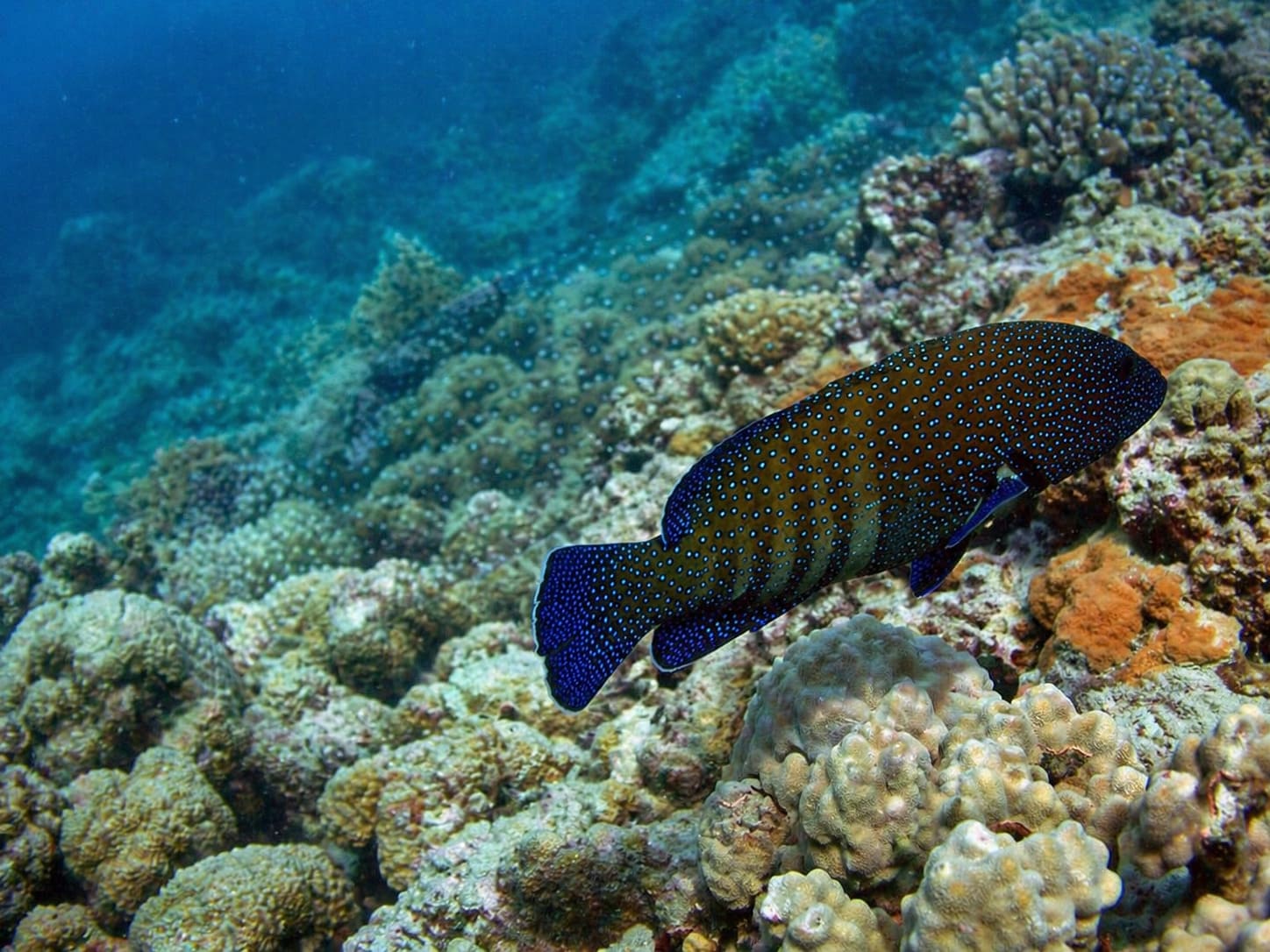

Groupers in Hawaii
Groupers are heavy-bodied predatory fish with large mouths, strong jaws and a patient way of hunting. Many stay close to reef bottoms, rocky ledges, caves or deeper offshore areas, where they can wait near cover until prey comes close.
Groupers are also called sea basses. Most have thick bodies, a protruding lower jaw and a strong, rounded look. Some blend into rocky habitat with dull or blotched colors, while others have more noticeable markings.
How Groupers Hunt
Groupers usually do not chase prey for long distances. Instead, they wait, stalk slowly and strike when the timing is right. When a grouper opens its large mouth quickly, it creates suction that pulls water and prey inside.
Depending on the species and size, groupers may eat fish, lobsters, octopuses, stingrays and other marine animals. Very large species can take surprisingly large prey.
Hawaiian Groupers
The Giant Grouper can reach about 9 feet long and weigh up to 900 pounds, but it is very rare in Hawaii. Most groupers connected with Hawaiian waters are much smaller.
One important native species is the Hawaiian Black Grouper, known as hapu'u. It is endemic to the Hawaiian archipelago and is especially associated with the Northwestern Hawaiian Islands. Because many groupers live deeper or near ledges and caves, snorkelers may not see them as often as smaller shallow reef fish.
When viewing groupers, move slowly and never reach into holes or try to flush fish from shelter. Related pages include the Hawaii fish guide, barracudas, jacks, lizardfishes and Hawaii beach safety tips.


