
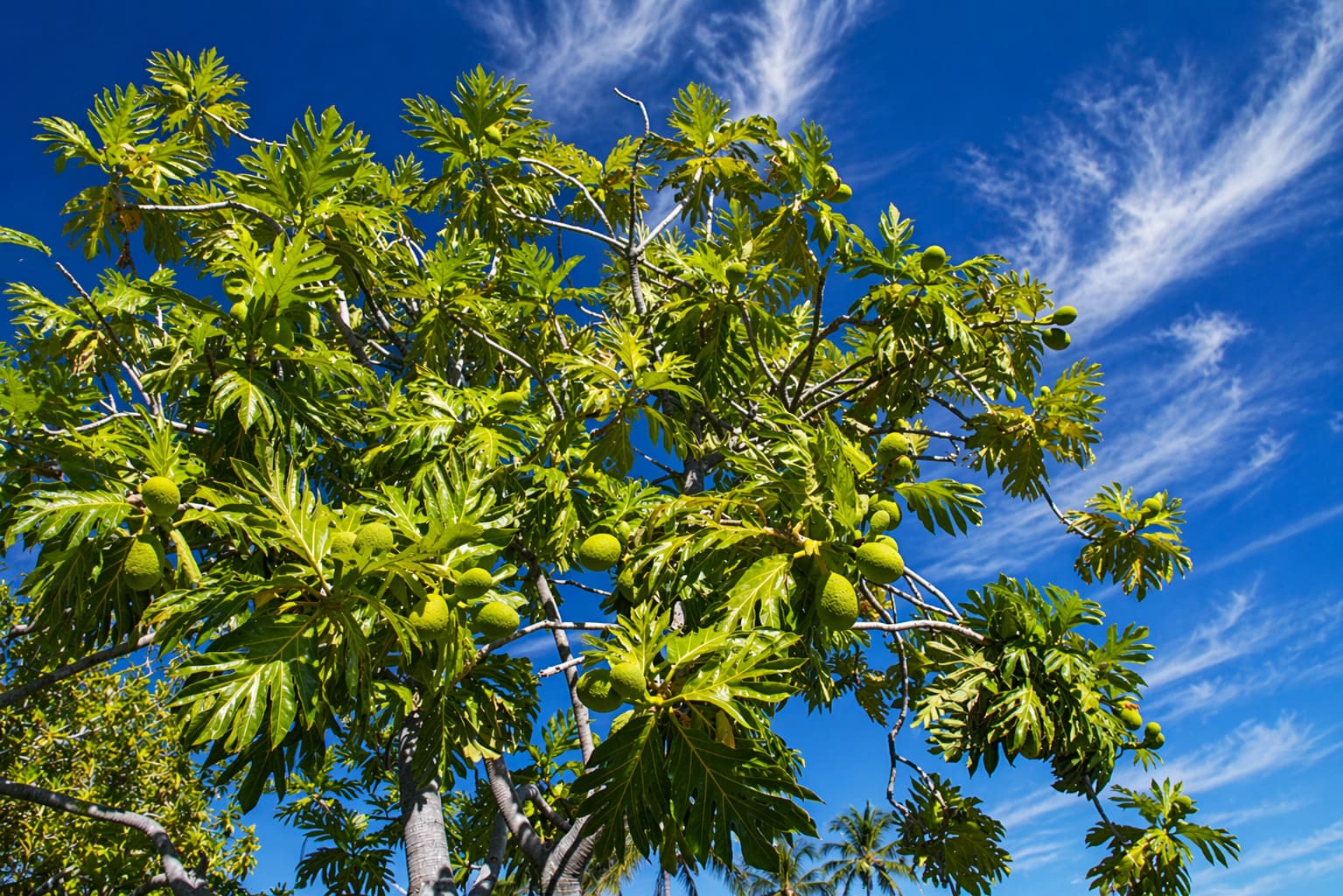

Breadfruit Tree Overview
The breadfruit tree, called ulu in Hawaii, is one of the classic canoe plants Polynesian voyagers brought across the Pacific. Its large, deeply lobed green leaves can grow up to about 2 feet long, giving the tree a bold look in gardens, farms and wetter island landscapes.
Breadfruit is best known for its round, starchy fruit. When cooked, the flesh has a mild flavor and a filling texture, which made it a useful food plant in many Pacific islands. It can be boiled, roasted, baked or pounded, depending on the stage of ripeness and the dish being prepared.
Ulu as a Canoe Plant
Polynesian voyagers carried plants that could feed, shelter and support communities far from any continent. Ulu fit that purpose well. Once established, a breadfruit tree can produce generous crops and provide shade around homes and cultivated areas. It belongs in the same broader story as other useful canoe and food plants such as coconut, banana, noni and taro.
In old Hawaii, ulu was not always eaten as heavily as taro, but it still had value. It could feed people and animals, and ulu poi, made by combining breadfruit with taro, became one way to use the starchy fruit.
Breadfruit Trees in Hawaii
Breadfruit trees grow best in warm areas with enough moisture and room for their spreading branches. The tree's big leaves, rounded fruit and tropical form make it easy to recognize once you know what to look for.
Compared with native forest trees such as koa or dramatic shade trees such as the banyan tree, breadfruit feels more closely tied to food, home gardens and practical island living. Its place in Hawaii comes from both its usefulness and the voyaging skill of the people who brought it here.


