
Noni Tree Overview
The noni tree, also called Indian mulberry, is one of the useful plants early Polynesian voyagers brought to Hawaii. It is not the prettiest fruit tree in the Islands, and it certainly is not the sweetest-smelling one, but noni earned its place because nearly every part of the tree had a purpose.
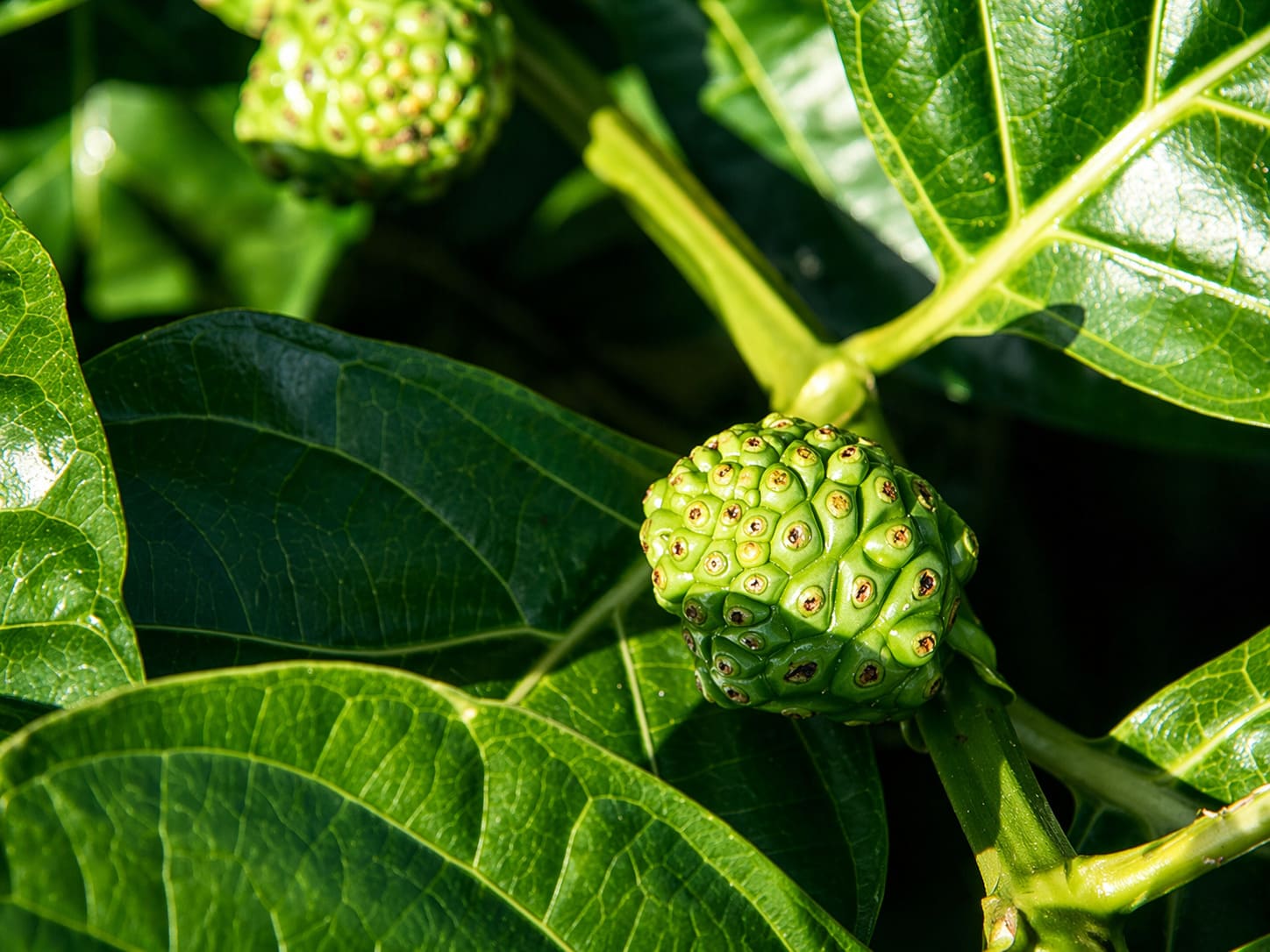
Noni fruit is pale, bumpy and strong smelling when ripe. Many people find the taste difficult at first, so noni is often mixed with sweeter fruit juice or made into fruit leather. Today, noni products are sold in health food stores, but the tree's older Hawaii story is tied to practical island use rather than modern marketing.
Traditional Uses and Kapa Dyes
Hawaiians valued noni for traditional practices involving the fruit, bark, trunk and roots. The tree also supplied dyes for kapa cloth. Red dye came from the bark, while yellow dye came from the trunk and roots. That made noni useful beyond food, connecting it to clothing, craft and daily life.
As a canoe plant, noni belongs with other plants carried for survival and usefulness, including coconut, breadfruit, banana and taro. Each plant served a different role, and noni's value came from its fruit, dyes and ability to grow in warm island conditions.
Noni Trees in Hawaii
Noni trees grow as small, somewhat rugged trees with glossy leaves and distinctive fruit. They can appear in gardens, farms and coastal or lowland areas where the climate suits them. Compared with native forest trees such as koa or large shade trees such as the banyan tree, noni has a humbler look.
Still, noni is memorable. Its smell, fruit shape and history make it one of Hawaii's more unusual useful trees. It may not win everyone over at first taste, but it has a practical past that makes it worth knowing.


