
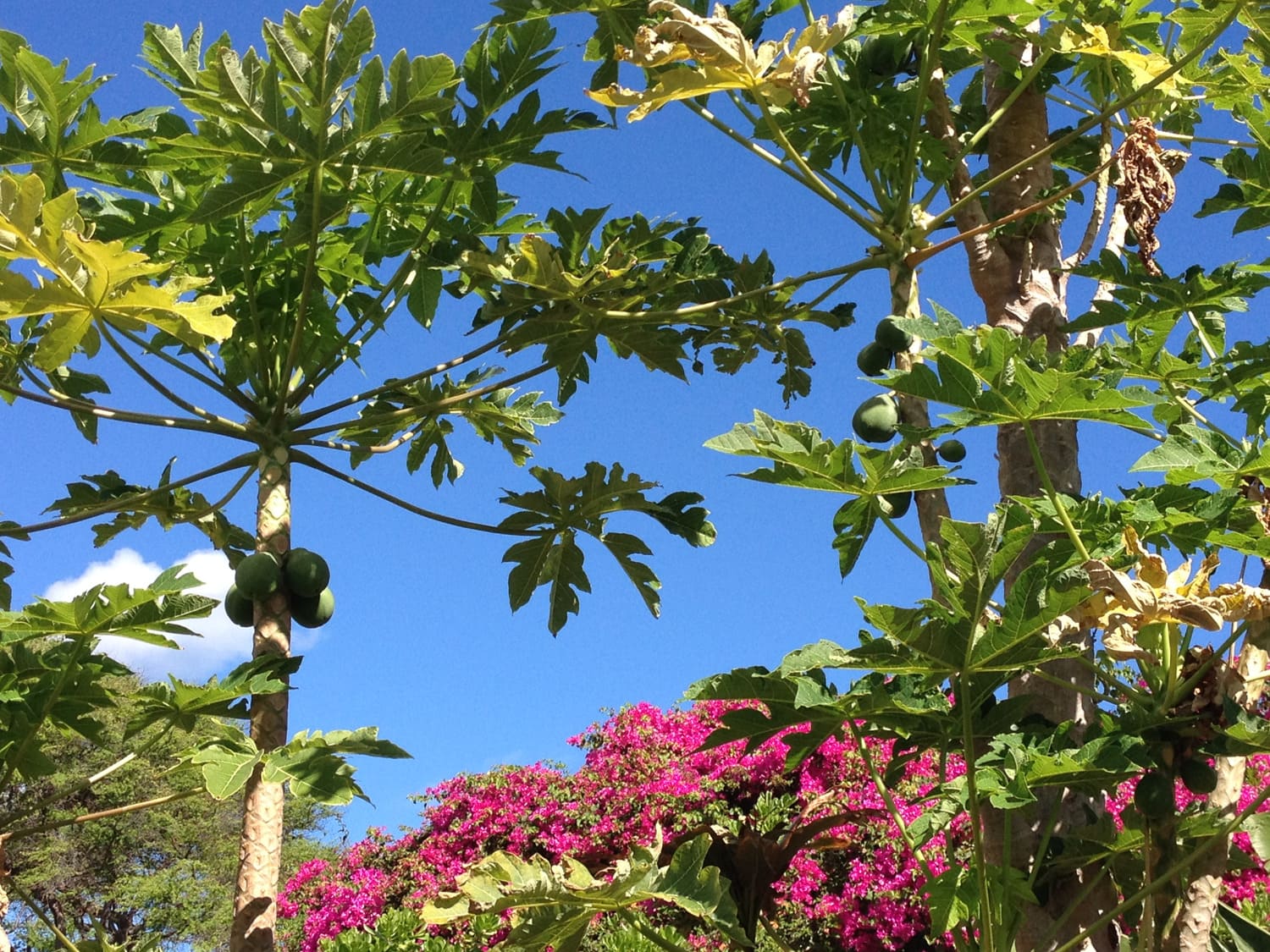

Papaya Tree Overview
The papaya tree is a fast-growing tropical fruit plant that looks simple at first glance but has a very unusual structure. It can reach up to about 25 feet tall, with most of its large leaves clustered near the top. The fruit grows along the side of the trunk, often hanging in green, yellow or orange groups just below the leaf crown.
Although people call it a tree, papaya does not have a hard woody trunk like koa or the banyan tree. Its trunk is hollow and held together by strong fibers in the bark. This gives the plant its tall, lightweight look and helps explain why papayas grow so quickly in warm areas.
Fruit, Seeds and Papain
Papaya trees are productive for much of their short life. A tree may live around 10 years, and in good Hawaii growing conditions it can bear fruit throughout the year. The fruit flesh may be yellow, orange or red, depending on the variety, with a soft sweetness that makes papaya a common breakfast fruit in the Islands.
Inside the fruit are many small black seeds covered in a slick coating. The seeds are edible and have a peppery, mustard-like flavor. In Hawaii, one seed is sometimes served with the fruit. Papaya also contains papain, an enzyme that can help tenderize meat, which gives the fruit another practical use beyond eating it fresh.
Papaya Trees in Hawaii
Papaya is not a canoe plant in the same traditional sense as coconut, breadfruit, banana or taro, but it has become a familiar part of Hawaii gardens and farms. Its quick growth, year-round fruiting and easy-to-recognize shape make it one of the Islands' most approachable fruit trees.
You may see papaya trees in backyards, small farms, roadside plantings and warm lowland gardens. Their tall hollow trunks, crown of leaves and fruit tucked close to the stem make them easy to spot once you know the pattern.


