
Big Island Travel Guide and Visitor Information
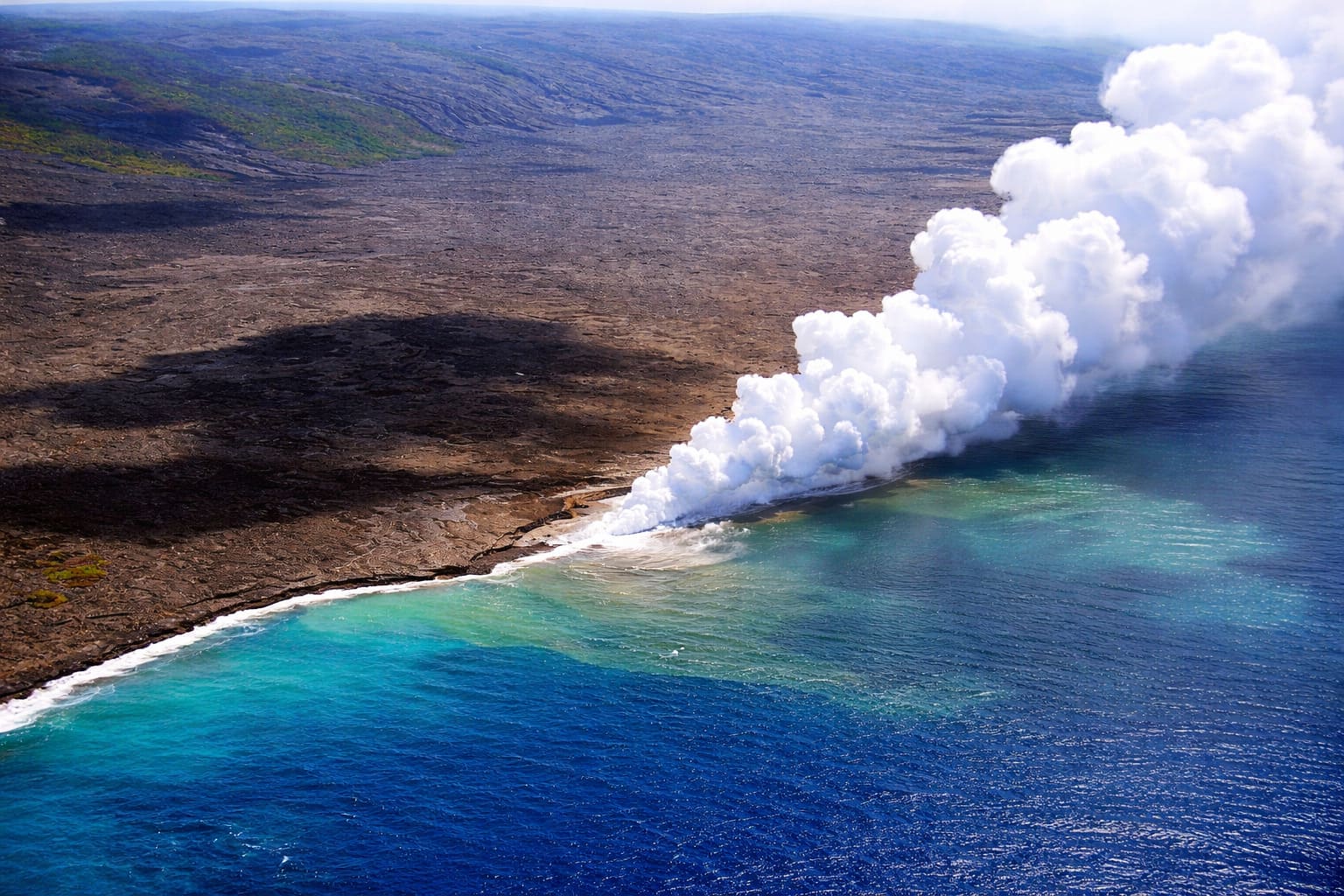
Aloha and welcome to Hawaii, the Hawaiian island that has more than earned its nickname as “The Big Island.” It is the largest of all the Hawaiian islands and the perfect embodiment of all Hawaii has to offer (the landmass of the islands of Oahu, Maui, Kauai, Molokai, Lanai, Kahoolawe and Niihau would all fit into the landmass of the Big Island). The Big Island's stunning beauty is surpassed only by her ability to continue expanding thanks to the constant flow of molten lava from Mt. Kilauea, which ranks among the world's most active volcanoes and may even top the list.
People often times get confused because Hawaii is the name of the entire state of Hawaii, as well as of the Big Island. That's why on our website, to avoid confusion, whenever we refer to the Big Island of Hawaii, we call this island simply by its nickname as most locals do it, which is the Big Island. Whenever we say Hawaii, we mean the entire state of Hawaii.
The Big Island is considered the golfing Mecca of Hawaii with 20 diverse and challenging courses and is also known as the sportfishing capital of Hawaii. Here you can tour the largest privately owned ranch in the country (Parker Ranch), stay in luxurious oceanfront resorts, visit Hawaii's last authentic native fishing village (Milolii) and spy on mysterious lava glowing in the deep night as the volcanic creation process ensues. The diverse activities and natural views here on the Big Island are truly unparalleled.
Geography and Climate
Comprising 62% of the state of Hawaii's total land area, the Big Island encompasses 4,038 square miles and is growing by the second.
It is considered the most ecologically diverse of all the Islands due to a very diverse range of natural environments. Those who love packing in a broad range of outdoor activities will never be bored on the Big Island. On no other Hawaiian island can you walk in snow and swim in the ocean on the same day! This is one of the Big Island's unique features.
Temperatures here average between 71 and 77 degrees Fahrenheit (21.6-25 C), dropping as you travel up the mountains. It is not uncommon for temperatures to plunge below freezing atop frequently snowcapped Mauna Kea (view panorama)× . The Big Island contains 11 out of 13 of the world's climatic zones, so bring layers if you plan to do some volcano hiking. Expert skiers with a 4-wheel drive vehicle might like to challenge themselves if the right conditions present themselves!
The Five Volcanoes
The Big Island is comprised of five distinct volcanoes that through repeated eruptions eventually came to overlap one another to form one solid island. Visit Kohala, Mauna Kea, Hualalai, Mauna Loa and Kilauea for a visual look at the island's rich geological history. Mauna Loa, the world's most massive mountain, and Kilauea, one of the world's most active volcanoes, are both active volcanoes, although Mauna Loa hasn't erupted since 1984.
Mauna Kea volcano is considered to be the tallest mountain in the world, measuring a total of 32,000 feet (9,753 m) from its base on the ocean floor to its summit. The Mauna Kea Observatory is a hub of significant astronomy research – from Mauna Kea's summit, 90% of all the stars within our Earthly perspective can be viewed!
Beaches
With 266 linear miles (428 km) of coastline, the Big Island of Hawaii is home to over one hundred diverse beaches. However, the typical white-sand beaches that the other Hawaiian islands are known for, are rarer here. On the Big Island, you will find four unique types of sand beaches: black sand beaches, green sand beaches, white sand beaches and “salt and pepper” beaches, which contain a mixture of black and white sand. For many visitors, the Big Island will be their only
chance to visit a green sand beach, Papakolea, where the sand was created from olivine crystals. Punaluu Black Sand Beach on the Big Island's south shore is popular for its frequent green sea turtle sightings.
Hilo
Hilo Town, also graced with the nicknames "America's Wettest City" and "Orchid Capital," emits a feeling of true tropics here on the Big Island's east shore. Hilo averages a rainfall of over 100 inches (254 cm) and, as you can imagine, the lush tropical flowers and plants here are mesmerizing and awe-inspiring. Stop by Liliuokalani Gardens and Wailuku River State Park for more breathtaking scenery.
Kohala
Kohala, located on the west shore, has the unofficial claim to fame of being the sunniest spot in the Hawaiian Islands. Luxury vacation rentals and resorts combine with a rich cultural history to form a desirable playground for those who like to vacation in style. Don't miss the ever-popular white sand sun spot Hapuna Beach.
Waipio Valley
To visit Waipio is to get a sense of what paradise truly should
be. Waipio Valley on the Big Island's northeastern shore is fittingly nicknamed "The Valley of the Kings.” This expansive and lush valley, accessible only by 4-wheel drive or on foot, rewards curious visitors with utopian views of waterfalls, fruit trees, fishponds, streams and endless visions to delight the senses.
Macadamia Nut Capital of the World
The town of Honokaa, located on the Big Island's northeastern coast in the Hamakua
District, is famous for its gorgeous tropical landscape. Visit the plantation town that earned this locale the title of “Macadamia Nut Capital of the World.” As you trek through the wild jungle setting of the Hamakua District, you won't want to miss Akaka Falls, one of the highest waterfalls in Hawaii.
What makes the Big Island unique?
Start your journey with a northbound tour along Hamakua Coast on the island's eastern side, then head back down the west side along the Kohala Coast for spectacular ocean views. Whatever route you choose and whatever activities you cram into your time on the Big Island of Hawaii, you'll have a memorable and scenic ride that leaves you anticipating your next visit. Many would agree that the Big Island is the best Hawaii has offer, a natural beginning, a place where the origins of these volcanic islands are crystal clear and the creation of life awakens a spiritual side of all who explore here.


