
Anaeho'omalu Beach, Big Island
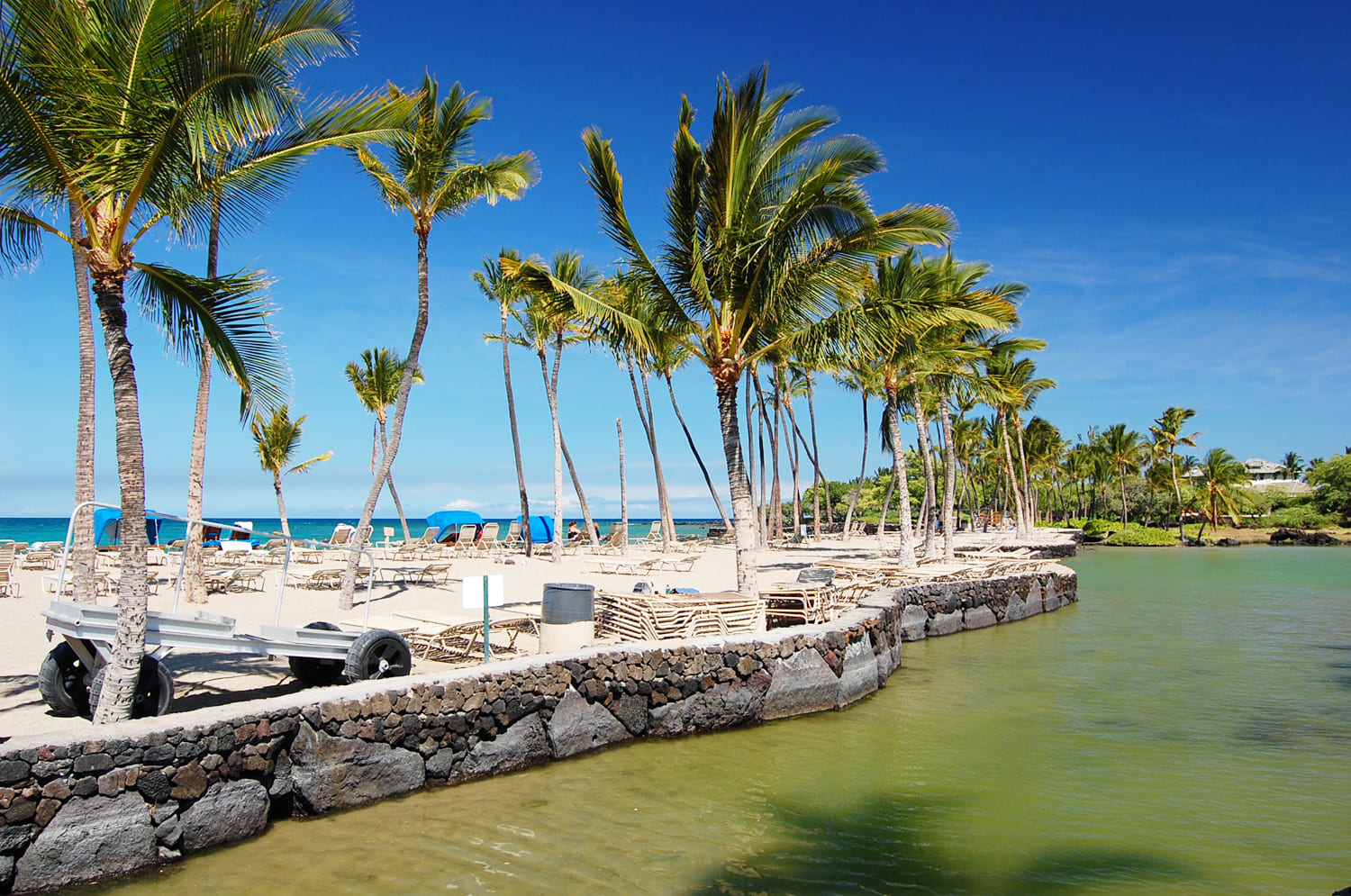
Anaeho'omalu Bay (also known as A-Bay), located on the Big Island of Hawaii's west shore near the Waikoloa Beach Marriott Resort, is one of the better-known beaches in this area. It features a long white-sand beach, several tide pools, fishponds and a large grove of coconut palms. You'll also find it better equipped than its neighbors, with restrooms, showers and a parking lot conveniently located nearby.
Like many of the Big Island beaches, Anaeho'omalu is protected by an offshore reef. The ocean bottom drops off gently here, and the beach is popular for a variety of ocean sports, including swimming, snorkeling, windsurfing, scuba diving and surfing. Dangerous ocean conditions may occur during storms or high surf.
Located just behind the beach are two ancient Hawaiian fishponds, named Ku'uali'i and Kahapapa (Ku'uali'i is the larger of the two). The ponds were once used by Hawaiian royalty to raise mullet and other small fish. They were maintained by the fishermen who lived in this area, and the fish that were raised here were only given to royal people. That's probably why this beach was named Anaeho'omalu, which means "restricted mullet" in the Hawaiian language.
The area is surrounded by educational plaques offering interesting tidbits of Hawaiian history. Today the ponds are a favorite photo spot, especially around sunset when the light reflects across the water.
If you'd like to explore a bit, you can hike the nearby King's Trail, which leads through a 2-acre (8,094 sq. m) historical park featuring rock shelters, petroglyphs (rock carvings) and other ancient artifacts. Another trail will take you to the Hilton Waikoloa and other luxury hotels.
In March 2011, Anaeho'omalu Bay was damaged by a tsunami wave that was caused by the devastating earthquake in Japan. The tsunami literally sliced Anaeho'omalu Bay into two pieces and broke the wall of the ancient Ku'uali'i Fishpond. The 100-foot gaping hole in the beach has been fixed.
Key Features
Anaeho'omalu Bay
Beach Activities
Activities
Beach Facilities
Facilities
Reviews
Reviews and Ratings
Share the first review
Have you visited Anaeho'omalu Bay? A few thoughtful details can help another traveler.
Been here? Share your experience
Map
Location, Parking and Directions
Anaeho'omalu Bay is located near Waikoloa Beach Resort on Hawaii Island's Kohala Coast. From Highway 19, turn toward Waikoloa Beach Resort near mile marker 76, then follow the road toward the beach parking area near Kings' Shops and the Waikoloa Beach Marriott area.
Photos
Anaeho'omalu Bay Photos
Photos show Anaeho'omalu Bay, A-Bay, white sand, palm trees, Ku'uali'i Fishpond, ancient fishpond views, beach paths, sunset light and Waikoloa shoreline scenery.


Video


